

Eye Exam Success Story: How an Annual Exam Caught a Serious Condition
An eye exam success story from The Villages: how a yearly exam caught a serious eye condition early, plus 5 simple tips to protect your own vision.
What to expect during a thorough eye exam in The Villages, Florida: the 5 key tests, why regular exams matter and how often to go. Book your exam today.
By HindSight Eye CareEye Exams
Medical review pending Updated
A thorough eye exam in The Villages, Florida, checks your vision and your eye health. Fixing blurry sight is only part of it.
It finds problems early, so you can treat them sooner. Below are the steps and how to prepare.
Your eyes change with age. Regular checkups find those changes before they become serious.
If you just moved to The Villages, finding a local eye doctor is a good early step. Visit our page on eye exams to find out more.
When you see an eye care professional, you can expect a full check of your visual health. The exam usually has these steps.
Vision acuity test. This measures how clearly you see at different distances.
You read an eye chart, and the results show if you need glasses or contacts.
Refraction. This finds your exact prescription.
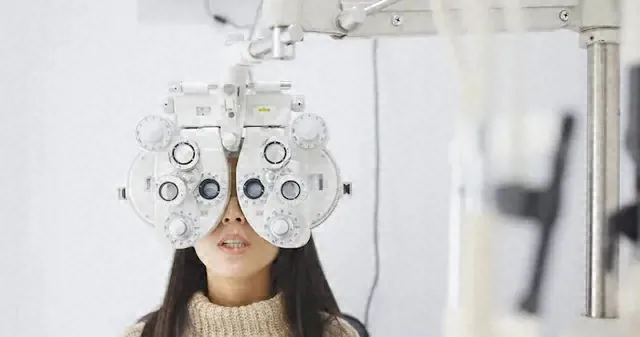
Your eye care professional uses an instrument called a phoropter to measure nearsightedness, farsightedness and astigmatism.
Slit lamp exam. A special microscope and a bright slit of light let your doctor view your cornea, iris, lens and optic nerve up close. It can reveal signs of eye disease.
Dilated eye exam. Eye drops widen your pupils for a short time. Then your doctor can examine the back of your eye, including the retina and optic nerve.
This step helps find glaucoma, macular degeneration and diabetic retinopathy. Read about dilated eye exams.
Additional tests. Depending on your needs, your doctor may also do these:
Regular exams pay off in several ways.
Early detection: Vision problems and eye diseases are found early, often before they affect daily life.
Prescription updates: Your sight can change, so regular exams keep your prescription current and your vision clear.
Eye health monitoring: Exams look at the overall health of your eyes as well as your vision.
Better quality of life: Clear, comfortable vision makes reading and driving easier.
Preventive care: Treating problems early can help prevent vision loss and other complications.
You may also like our tips on improving your eyesight.
Before your visit:
Write down any vision concerns, such as trouble reading, eye strain or changes in your side vision.
Gather your medical history, including eye injuries, surgeries or conditions.
Bring a list of your medicines, since some can affect your eyes.
Bring your glasses or contact lenses.
Arrive a few minutes early for paperwork and pre-exam tests.
For more, read our guide on what to bring to your eye exam.
Look for an experienced, licensed optometrist or ophthalmologist with a strong record of quality care. Ask friends, family or your primary care doctor for advice.
You can also check online reviews of local providers, including our Google reviews. Our tips on choosing an eye doctor can help.
Most people should have a complete exam every one to two years. Go more often if you have a history of vision problems or eye disease.
Call an eye care professional right away if you notice blurred vision, eye pain or sudden vision loss.
Coverage depends on your plan. Some plans cover certain eye exams, and others do not.
Check with your provider to learn your benefits. See our page on vision insurance.
You will have a series of tests, including vision acuity, refraction and a slit lamp exam. You may also have a dilated exam. Your eye care professional will guide you through each step.
Look for experience and good patient reviews. Your primary care doctor may also suggest someone.
Book your eye exam with Hindsight Eye Care, or call (352) 399-5412.
Written and published by HindSight Eye Care on April 2, 2025. This article is general information, not medical advice. Please talk with your eye doctor about your own care.
Want to know more? These independent eye health groups explain the topics on this page, starting with National Eye Institute. Each link opens in a new tab.
Eye Exam Success Story: How an Annual Exam Caught a Serious Condition
An eye exam success story from The Villages: how a yearly exam caught a serious eye condition early, plus 5 simple tips to protect your own vision.
Meet Our Eye Care Team: Compassionate Eye Doctors Near You
Eye care team in The Villages: meet Dr. James Russell, OD and our licensed opticians at Hindsight Eye Care. Learn who will care for you, then book an exam.

Choosing an Eye Doctor in The Villages, FL: What to Look For
Choosing an eye doctor in The Villages, FL? Use these 7 tips on credentials, services, technology, reviews, insurance and location, then book your exam.
Make time for your eyes. We’ll make you feel right at home.
Request an eye examOr call (352) 399-5412
Accessibility