
Meet Our Eye Care Team: Compassionate Eye Doctors Near You
Eye care team in The Villages: meet Dr. James Russell, OD and our licensed opticians at Hindsight Eye Care. Learn who will care for you, then book an exam.
An eye exam success story from The Villages: how a yearly exam caught a serious eye condition early, plus 5 simple tips to protect your own vision.
By HindSight Eye CareEye Exams

Medical review pending Updated
This eye exam success story shows why a yearly exam matters. For many people in The Villages, Florida, an eye exam is one more item on a checklist.
For one patient, it caught a serious eye condition early and helped protect her vision.
Linda is a retiree who moved to The Villages for its active lifestyle and close community. She walked every day, played pickleball with friends and saw her doctors on schedule.
Eye exams were not a priority until a neighbor told her to book one.
During her routine eye exam, Linda’s optometrist saw some changes at the back of her eye, in the retina. Simple tests would not have shown them. Left untreated, the condition could have caused severe vision loss.
The tests showed early signs of wet macular degeneration. In this condition, abnormal blood vessels grow under the retina.
It can cause lasting loss of central vision, and symptoms often show up only after much damage is done.
Because the exam caught it early, Linda’s doctor made a treatment plan right away. With care, Linda kept her vision.
For more help with your vision, see the American Academy of Ophthalmology’s tips for perfect vision.
Yearly eye exams matter most if you are 55 or older. Besides updating your prescription, they can find hidden problems such as:
The American Academy of Ophthalmology says routine eye exams are your best defense against sight-threatening conditions. These become more likely with age. For help with coverage, read about vision coverage on Healthcare.gov.
Families who want vision coverage for children or grandchildren can visit Insure Kids Now. You can also see our page on vision insurance.
The exam is simple and does not hurt. It includes these steps:
Visual acuity test: This measures how clearly you see at different distances, often with an eye chart.
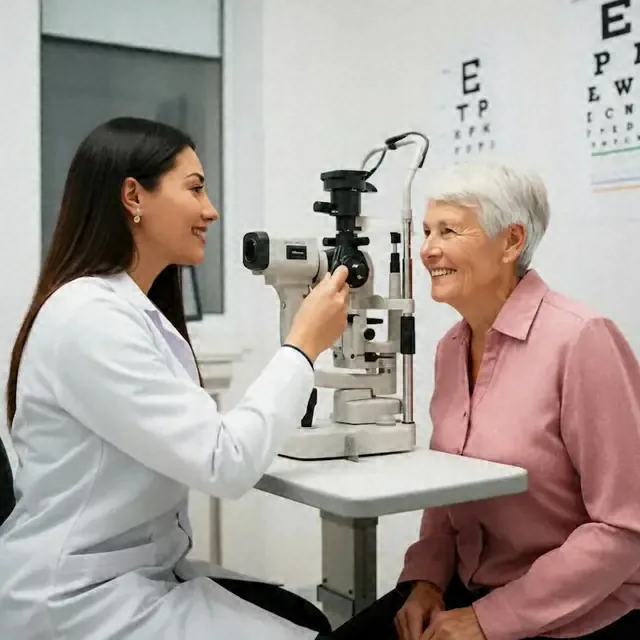
Retina exam: Your doctor uses a slit lamp or imaging tools to look at your retina, optic nerve and blood vessels for signs of disease.
Eye pressure check: This measures the pressure inside your eye, which helps show your risk for glaucoma.
Prescription check: If you wear glasses or contacts, your optometrist sees if you need an update.
Disease screening: The exam looks for cataracts, macular degeneration and glaucoma at their earliest, most treatable stages.
In Linda’s case, the retina exam made the difference. Find out more about the complete eye exam.
At Hindsight Eye Care, our modern tools and team of optometrists help us find problems early, as in Linda’s case.
We also offer many eyeglasses to match your style and vision needs. We can help with reading glasses or new daily frames.
For lower-cost vision care, look into AARP VSP Vision Insurance and EyeMed Vision Benefits. These plans can help you pay for exams and eyewear.
Each year, many Americans lose vision that could have been saved because they put off eye care.
Think of your grandchild’s first recital, community events in The Villages or your favorite book. Those are the things an exam helps you keep.
Besides your yearly exam, these habits protect your sight.
Wear sunglasses. Quality sunglasses shield your eyes from harmful UV rays.
Eat a balanced diet. Leafy greens, fish rich in omega-3 fats and nuts give your eyes important nutrients.
Exercise often, since activity boosts circulation, including to the eyes.
Follow the 20-20-20 rule. Every 20 minutes, look at something 20 feet away for 20 seconds.
Quit smoking, because smoking greatly raises your risk of macular degeneration and cataracts.
For more ideas, read the AAO’s healthy vision tips.
Linda’s exam found her condition early. If you are due for one, book your eye exam at Hindsight Eye Care today or call (352) 399-5412.
Written and published by HindSight Eye Care on May 1, 2026. This article is general information, not medical advice. Please talk with your eye doctor about your own care.
Want to know more? These independent eye health groups explain the topics on this page, starting with National Eye Institute. Each link opens in a new tab.
Meet Our Eye Care Team: Compassionate Eye Doctors Near You
Eye care team in The Villages: meet Dr. James Russell, OD and our licensed opticians at Hindsight Eye Care. Learn who will care for you, then book an exam.

Choosing an Eye Doctor in The Villages, FL: What to Look For
Choosing an eye doctor in The Villages, FL? Use these 7 tips on credentials, services, technology, reviews, insurance and location, then book your exam.
Glaucoma Screening After 60: Get Checked Before It’s Too Late
Glaucoma screening in The Villages: who is at risk after 60, what happens during a screening and how often to go. Book your simple exam today.
Make time for your eyes. We’ll make you feel right at home.
Request an eye examOr call (352) 399-5412
Accessibility