

Eye Exam Success Story: How an Annual Exam Caught a Serious Condition
An eye exam success story from The Villages: how a yearly exam caught a serious eye condition early, plus 5 simple tips to protect your own vision.
A complete eye exam checks your vision and eye health in 12 parts. See what to expect, how to prepare and how often to go.
By HindSight Eye CareEye Exams
Medical review pending Updated
A complete eye exam is the full visit: your vision, your eye health and how your two eyes work as a team. At our office in Pinellas Plaza, Dr. James Russell checks all three.
Nothing about it hurts.
People often ask us why they need one if their glasses still seem fine. The answer is that glaucoma, early cataracts and retina changes rarely announce themselves. You find them by looking.
Three kinds of eye professionals share the work, and the names are easy to mix up.
Optometrist (OD): Dr. Russell is one. An optometrist examines your eyes, writes prescriptions and diagnoses and treats many eye conditions.
Optometrists don’t do surgery.
Ophthalmologist (MD or DO): a medical doctor who also does eye surgery. If you need cataract surgery, for example, we refer you to one.
Optician: our opticians don’t give exams. They fit your frames, measure your lenses and adjust your glasses after the lab makes them.
Most visits are routine: a yearly check when your eyes feel normal. A follow-up visit tracks something we already know about, like diabetes or macular degeneration.
An urgent visit is for a sudden change, such as an injury, a red painful eye or a burst of new floaters. Call us the same day for those.
Here is what we look at, in roughly the order it happens.
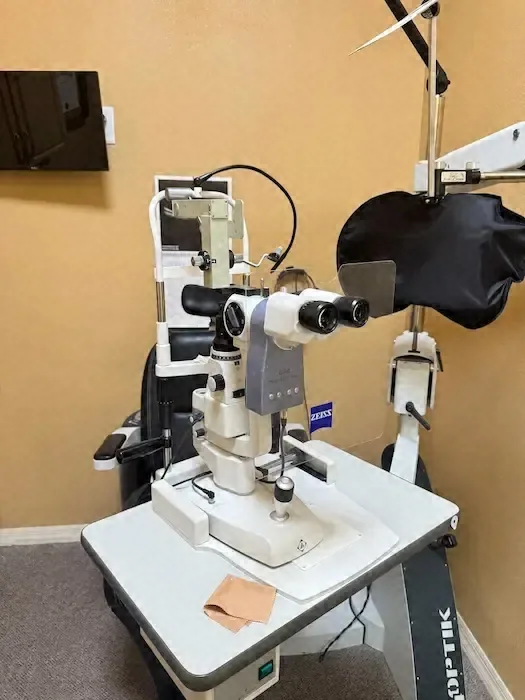
Then Dr. Russell uses the slit lamp, a microscope with a thin bright beam, to look closer.
Bring your current glasses and contacts, any old prescriptions and a list of your medicines and supplements. Your insurance card helps too. Our page on what to bring to your eye exam has the full list.
If your pupils are dilated, the world looks bright and close-up reading gets blurry for a few hours. Bring sunglasses.
Some patients like to have someone drive them home. Our page on dilated eye exams explains the drops.
Dr. Russell goes over what he found in plain words. If you need new glasses, our opticians help you pick frames right after, and our lab can make many pairs in about an hour.
For most adults, every one to two years. After 60, or with diabetes or a family history of glaucoma, once a year is safer. Our guide to senior eye exam frequency breaks it down by age.
Ready to come in? Book your eye exam or call (352) 399-5412. If you have diabetes, ask about a diabetic eye exam when you book.
Written and published by HindSight Eye Care on August 15, 2024. This article is general information, not medical advice. Please talk with your eye doctor about your own care.
Want to know more? These independent eye health groups explain the topics on this page, starting with National Eye Institute. Each link opens in a new tab.
Eye Exam Success Story: How an Annual Exam Caught a Serious Condition
An eye exam success story from The Villages: how a yearly exam caught a serious eye condition early, plus 5 simple tips to protect your own vision.
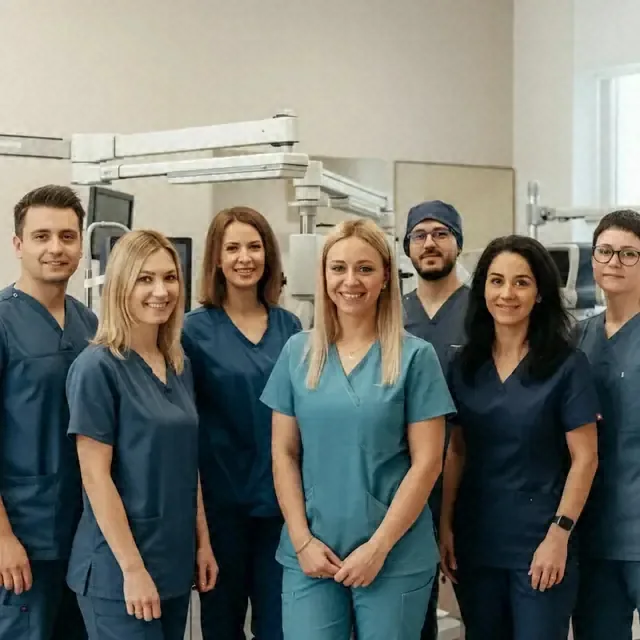
Meet Our Eye Care Team: Compassionate Eye Doctors Near You
Eye care team in The Villages: meet Dr. James Russell, OD and our licensed opticians at Hindsight Eye Care. Learn who will care for you, then book an exam.

Choosing an Eye Doctor in The Villages, FL: What to Look For
Choosing an eye doctor in The Villages, FL? Use these 7 tips on credentials, services, technology, reviews, insurance and location, then book your exam.
Make time for your eyes. We’ll make you feel right at home.
Request an eye examOr call (352) 399-5412
Accessibility