

Seasonal Eye Allergies in Florida: Relief for Villagers’ Itchy Eyes
Seasonal eye allergies in Florida explained: causes, symptoms, 5 simple lifestyle tips and eye drops for relief, plus when to see a doctor.
Cataract symptoms to watch for in The Villages: 5 signs such as blurry vision, glare and faded colors. Learn when to book an eye exam.
By HindSight Eye CareEye Health
Medical review pending Updated
Cataract symptoms can feel like a normal part of aging, but you do not have to live with them. The main signs are cloudy vision, glare and faded colors.
If you notice them, an eye exam can tell you what is going on. Below, you will find the early signs and the treatment choices.
A cataract is a cloudy spot in the lens of your eye. It makes it hard to see clearly. The cloudiness often grows slowly, and it affects older adults most.
Cataracts are one of the leading causes of vision loss worldwide. Surgery can treat them.
Maybe you have trouble placing a familiar face at the market. Maybe you lose the golf ball in the air, or the Florida sun feels too bright. Cataracts could be the cause.
To find out more, read the National Eye Institute page on cataracts: symptoms and causes. You can also read our page on cataracts for adults.
These are the most common cataract symptoms. The sooner you spot them, the sooner you can get care.
Blurry or cloudy vision: Cataracts often start as hazy eyesight, like looking through a foggy window. As a result, reading and driving can get harder.
Sensitivity to light and glare: Headlights or bright sun may feel too strong, especially on sunny Florida afternoons.
Trouble seeing at night: You may see halos or glare around lights. This can make driving after dark in The Villages feel worrying.
Faded or yellow colors: A favorite colorful blouse may look dull. Cataracts can make colors seem faded or yellow.
Frequent prescription changes: Your glasses or contacts may stop working well, even after several updates. This can be a sign that a cataract is growing.
If you notice any of these cataract symptoms, see an eye doctor. Catching a cataract early gives you more options. Book an eye exam to have your eyes checked.
Cataract surgery is a routine procedure, done more than 3.7 million times each year in the United States. If you need it, this is what to expect.
In surgery, the doctor removes the cloudy lens and puts in a clear artificial lens. This lens is called an intraocular lens, or IOL.
You go home the same day, since it is an outpatient procedure. It usually takes less than 30 minutes per eye.
Talk with your eye surgeon about which choice suits you. Your new lens can also match your vision needs:
Whatever you choose, you may still need eyeglasses for some tasks.
Your eye needs time to heal after surgery. Most people return to normal activity within about a week, and these steps help you heal.
Follow your doctor’s instructions. These may include using prescribed drops to prevent infection, wearing a shield while you sleep, and avoiding eye strain and dust.
Ease back into activity. Walking and light activity are usually fine the day after surgery. Still, avoid heavy lifting and bending over for at least two weeks, or as your surgeon advises.
Protect your eyes. Wear sunglasses that block 100% of UVA and UVB rays. They protect your healing eyes and feel better in the bright sun.
Report problems. If you have lasting pain, redness or changes in your vision, call your surgeon right away.
Even if you have no cataract symptoms yet, regular exams matter more as you age. A routine eye exam can find glaucoma, macular degeneration and dry eye early. Then you can act before the problem gets worse.
Finding a problem early means care can start sooner. Good vision also keeps you active in the community.
If dry eye bothers you too, see our page on dry eye treatment.
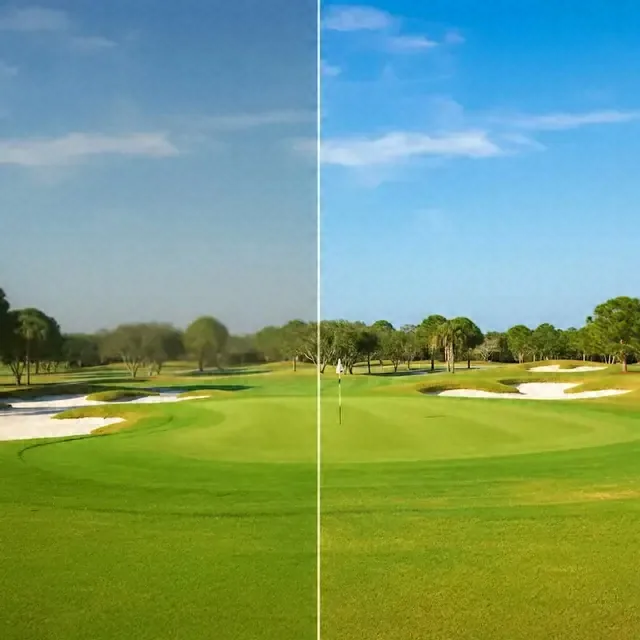
Imagine standing on a golf course in The Villages. If one eye sees a bright, clear fairway and the other sees a fog, a cataract may be the reason. That fog can hide the small details you enjoy.
If you notice any cataract symptoms, call (352) 399-5412 or visit Hindsight Eye Care to schedule your evaluation.
Written and published by HindSight Eye Care on December 15, 2025. This article is general information, not medical advice. Please talk with your eye doctor about your own care.
Want to know more? These independent eye health groups explain the topics on this page, starting with National Eye Institute. Each link opens in a new tab.
Seasonal Eye Allergies in Florida: Relief for Villagers’ Itchy Eyes
Seasonal eye allergies in Florida explained: causes, symptoms, 5 simple lifestyle tips and eye drops for relief, plus when to see a doctor.

Computer Glasses: Why Villagers Should Consider Blue Light Protection
Computer glasses can ease tired, dry eyes from screens. Learn 3 key features, if you need a special prescription and 4 habits to cut eye strain.

Night Vision Problems: Why They Get Worse with Age and What You Can Do
Night vision problems often get worse with age. Learn 4 common causes, from cataracts to dry eyes, and simple steps to see better after dark.
Make time for your eyes. We’ll make you feel right at home.
Request an eye examOr call (352) 399-5412
Accessibility