The Top 10 Eyeglass Questions Patients in The Villages Ask
Choosing a new pair of eyeglasses is an important decision. It’s a purchase that affects how you see the world and how the world sees you. For residents of The Villages, where an active, social lifestyle is the norm, glasses are a critical tool and a key fashion accessory. It’s no surprise, then, that patients have many questions when it comes time to select new eyewear. From understanding prescriptions to choosing the right frames and lenses, navigating the options can feel overwhelming.
We believe that an informed patient is a happy patient. Answering your questions is a fundamental part of the process, ensuring you feel confident and excited about your new glasses. To help, we’ve gathered the top 10 most frequently asked questions we hear from our patients in The Villages. This FAQ guide provides clear, straightforward eyewear answers to help you make the best choices for your vision, lifestyle, and budget.
Table of Contents
- 1. How often do I need to update my eyeglass prescription?
- 2. Why are my new glasses giving me a headache?
- 3. What’s the difference between progressive lenses and bifocals?
- 4. Are anti-glare and scratch-resistant coatings really worth it?
- 5. How do I choose the best frames for my face shape?
- 6. Why are glasses from an eye doctor’s office better than online ones?
- 7. Can my new prescription be put in my old frames?
- 8. How should I properly clean and care for my eyeglasses?
- 9. Do I need a separate pair of prescription sunglasses?
- 10. How much should I expect to pay for a good pair of glasses?
- Get Your Eyewear Questions Answered by the Experts
1. How often do I need to update my eyeglass prescription?
Most adults should have a comprehensive eye exam every one to two years. Your optometrist will advise you on the exact frequency based on your age, risk factors, and overall eye health. Even if your vision seems stable, a regular eye exam is crucial. It not only ensures your prescription is accurate but also allows your doctor to check for silent eye diseases like glaucoma or macular degeneration. The National Eye Institute emphasizes that regular exams are key to keeping your eyes healthy.
2. Why are my new glasses giving me a headache?
It’s common to experience a short adjustment period with new glasses, which can sometimes include mild headaches or a feeling of “eye strain.” This happens because your brain and eye muscles are adapting to seeing the world through a new, clearer prescription. The adjustment period is often more noticeable with significant prescription changes or when switching to a new lens type, like progressives. This usually resolves within a few days to two weeks. If the discomfort persists, it’s important to contact your eye doctor’s office. The issue could be related to the prescription or the frame fit, and a simple adjustment can often solve the problem.
3. What’s the difference between progressive lenses and bifocals?
Both are multifocal lenses for people with presbyopia (age-related loss of near vision), but they work differently.
- Bifocals have two distinct vision zones with a visible line separating them: a large top area for distance and a small bottom segment for reading. They are functional but have an “image jump” and no correction for intermediate distances.
- Progressive Lenses offer a seamless, no-line transition through multiple powers for clear vision at all distances—far, intermediate (arm’s length), and near. They provide more natural vision and a more youthful look, making them the preferred choice for most active individuals.
4. Are anti-glare and scratch-resistant coatings really worth it?
Absolutely. These are two of the most valuable lens coatings available.
- Anti-Glare (or Anti-Reflective) Coating: This treatment virtually eliminates reflections on your lenses. This provides sharper vision, reduces eye strain from screens, and dramatically cuts down on glare from headlights during night driving. It also makes your lenses look nearly invisible.
- Scratch-Resistant Coating: This hardens the lens surface, making your eyeglasses much more durable and protecting them from the minor scratches of everyday wear and tear. It’s a small investment that significantly extends the life of your lenses.
5. How do I choose the best frames for my face shape?
While the best frame is one that makes you feel confident, a good guideline is to choose a shape that contrasts with your face shape to create balance.
- Round Face: Angular or rectangular frames add definition.
- Square Face: Round or oval frames can soften a strong jawline.
- Heart-Shaped Face: Frames wider at the bottom, like aviators, can balance a wider forehead.
- Oval Face: This balanced shape works well with almost any frame style.
Our expert opticians are trained stylists who can help you find a frame that not only complements your features but also fits comfortably and works perfectly with your prescription.
6. Why are glasses from an eye doctor’s office better than online ones?
The biggest factor is professional expertise and fitting. When you buy glasses from a practice like ours, an experienced optician takes precise measurements to ensure the optical center of the lenses aligns perfectly with your pupils. They also expertly fit and adjust the frame to your face for optimal comfort and vision. Online retailers can’t offer this crucial hands-on service. An improper fit can lead to headaches, eye strain, and poor vision, even with a correct prescription. This personalized service is a core part of comprehensive eye care.
7. Can my new prescription be put in my old frames?
Often, yes! If your current frames are in good condition and are a suitable shape and size for your new prescription (especially for multifocal lenses), we can certainly put new lenses in them. It’s a great way to save money if you still love your old frames. Our opticians will inspect your frames to make sure they are durable enough to withstand the lens replacement process.
8. How should I properly clean and care for my eyeglasses?
Proper care keeps your vision clear and extends the life of your glasses.
- DO: Rinse your glasses with lukewarm water to remove debris, then apply a small drop of lotion-free dish soap to each lens. Gently rub, rinse thoroughly, and dry with a clean, soft microfiber cloth. You can also use a lens cleaning spray designed for AR-coated lenses.
- DON’T: Never use paper towels, napkins, or the corner of your shirt to clean your lenses, as these materials can be abrasive and cause scratches. Avoid household cleaners like window cleaner, which can damage lens coatings.
9. Do I need a separate pair of prescription sunglasses?
While it’s a personal choice, a dedicated pair of prescription sunglasses is highly recommended, especially in sunny Florida. They provide better visual comfort and safety for driving and outdoor activities by reducing glare. More importantly, they protect your eyes from harmful UV radiation, which can contribute to cataracts and other eye diseases. The CDC notes that sunglasses are a key tool for protecting your vision and eye health. Light-adaptive (photochromic) lenses are a great alternative if you prefer an all-in-one solution.
10. How much should I expect to pay for a good pair of glasses?
The cost of eyeglasses can vary widely based on three main factors: the frame, the lens material, and the lens coatings. A basic pair of single-vision glasses will be more affordable than a pair of designer frames with high-index progressive lenses and premium coatings. At Hindsight Eye Care, we offer a wide selection of quality frames and lens packages to fit every budget. We also help you maximize your vision insurance benefits to reduce your out-of-pocket costs.
Get Your Eyewear Questions Answered by the Experts
Navigating the world of eyewear is much easier with a trusted partner. Our team at Hindsight Eye Care is here to answer all your questions and guide you to the perfect pair of glasses for your needs, style, and budget.
We are dedicated to providing not just a prescription, but a complete solution that enhances your vision and your life.
Have More Questions? We Have Answers.
Let our friendly and knowledgeable team help you find your perfect pair of glasses.
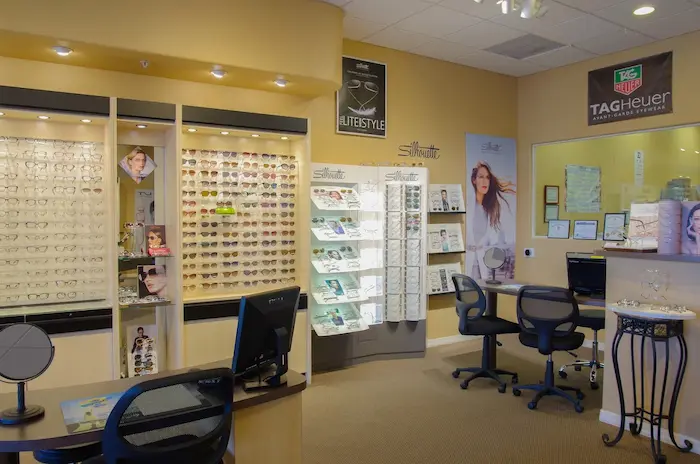
Contact us or visit our optical boutique today. We’re here to help!
Meta Title: Top 10 Eyeglass Questions in The Villages | Eyewear FAQ
Meta Description: Get answers to the top 10 eyeglass questions asked in The Villages, FL. Our FAQ covers prescriptions, frames, lenses, cost, and more.
Focus Keywords:
- Eyeglass questions The Villages
- FAQ eyeglasses
- Common patient concerns
- Eyewear answers